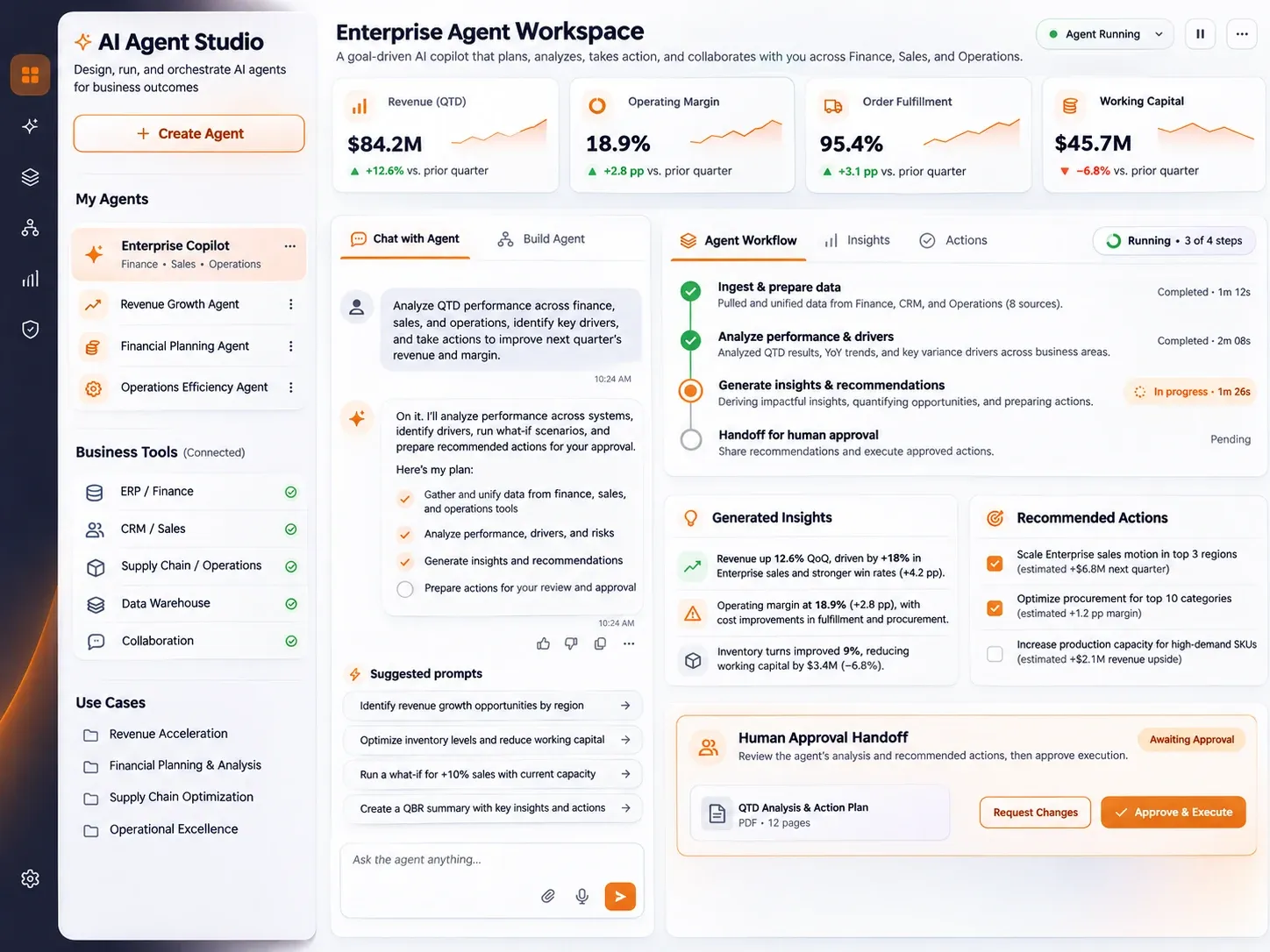
Most companies no longer ask whether generative AI matters. They ask where it will pay for itself first. The honest answer is that the best use cases are rarely the flashiest ones: they sit inside work your teams already do every week, on data you already own.
This article looks at the areas where we see generative AI earn its place in enterprise work, and at a simple way to choose the first use case so it reaches production instead of stalling as a pilot.
What makes a use case worth it
Before looking at departments, it helps to know what good candidates have in common. A use case is usually worth pursuing when:
- The work is frequent and repetitive.Summaries, first drafts, reconciliations and lookups that happen daily add up quickly.
- The inputs already exist.Documents, tickets, CRM notes, ledgers and policies that the model can read, without a new data project first.
- A person stays in the loop.The AI drafts, explains or suggests; someone accountable reviews and decides.
- Success can be measured.Hours saved, cycle time, resolution time, error rates — something you can compare before and after.
Finance and planning
Finance teams spend a large share of each close explaining numbers rather than analysing them. Generative AI is well suited to that explanation layer.
- Variance commentaryfirst-draft explanations of budget-to-actual movements, built from the ledger and planning data, for the analyst to edit.
- Management reportingnarrative summaries for monthly packs and board decks, consistent in tone and structure.
- Ask-your-dataplain-language questions over planning and actuals data, with the answer tied back to the figures it came from.
These work best on top of a clean planning model. If the numbers are not trusted yet, fix that first — see our Enterprise Planning & EPM work.
Sales and marketing
- Account briefsa one-page summary of an account from CRM history, open opportunities and recent conversations before every call.
- Proposal and RFP draftsfirst drafts assembled from approved past answers, so the team spends its time on what is specific to this deal.
- Campaign variantson-brand copy for different segments and channels, reviewed by marketing before anything goes out.
Customer support and service
Support is often the fastest place to show value, because the knowledge already exists in help articles, past tickets and product documentation.
- Agent assistsuggested replies and relevant articles while the agent works the ticket.
- Ticket summariesa clear summary on hand-off or escalation, so nobody re-reads a long thread.
- Self-service answersanswers drawn only from approved content, with a clear route to a person when the question falls outside it.
Operations and supply chain
- Exception handlingplain-language explanations of why an order, shipment or forecast is off track, and the options to fix it.
- Document processingpulling key fields from invoices, contracts and delivery notes into the systems that need them.
- Standard operating proceduresanswering “how do we do this here?” from your own procedures instead of tribal knowledge.
Internal knowledge and IT
Every organisation has policies, runbooks and project documents that people struggle to find. A knowledge assistant grounded in those sources — and respecting who is allowed to see what — saves time across every team. In IT, the same approach helps with code explanation, test generation and incident summaries.
How to choose your first use case
A good first project is small enough to finish and visible enough to matter. Score each candidate on four questions:
- Valuehow much time, cost or risk does it remove, and for how many people?
- Data readinessare the documents and systems it needs accessible and reasonably clean?
- Riskwhat happens if the output is wrong, and is there a person reviewing it before it matters?
- Adoptiondoes it fit into a tool people already use, or does it ask them to change how they work?
Pick the use case that scores well on all four, not the one that scores highest on value alone. Then agree up front how you will measure success, and plan for production — security, access control, monitoring and support — from the start, not after the demo.
Where to go from here
Generative AI delivers when it is treated as part of the business process, not a side experiment. If you are planning your next steps, our practical generative AI roadmap walks through the stages from first use case to scaled adoption.
ScriptStory designs, builds and runs enterprise AI agents, copilots and automation on top of trusted data. Explore AI Solutions & Engineering or talk to our team about the use case you have in mind.
Want to put this into practice?
Talk to our team about your data, planning and AI goals, or book a demo and see how it works on your own data.