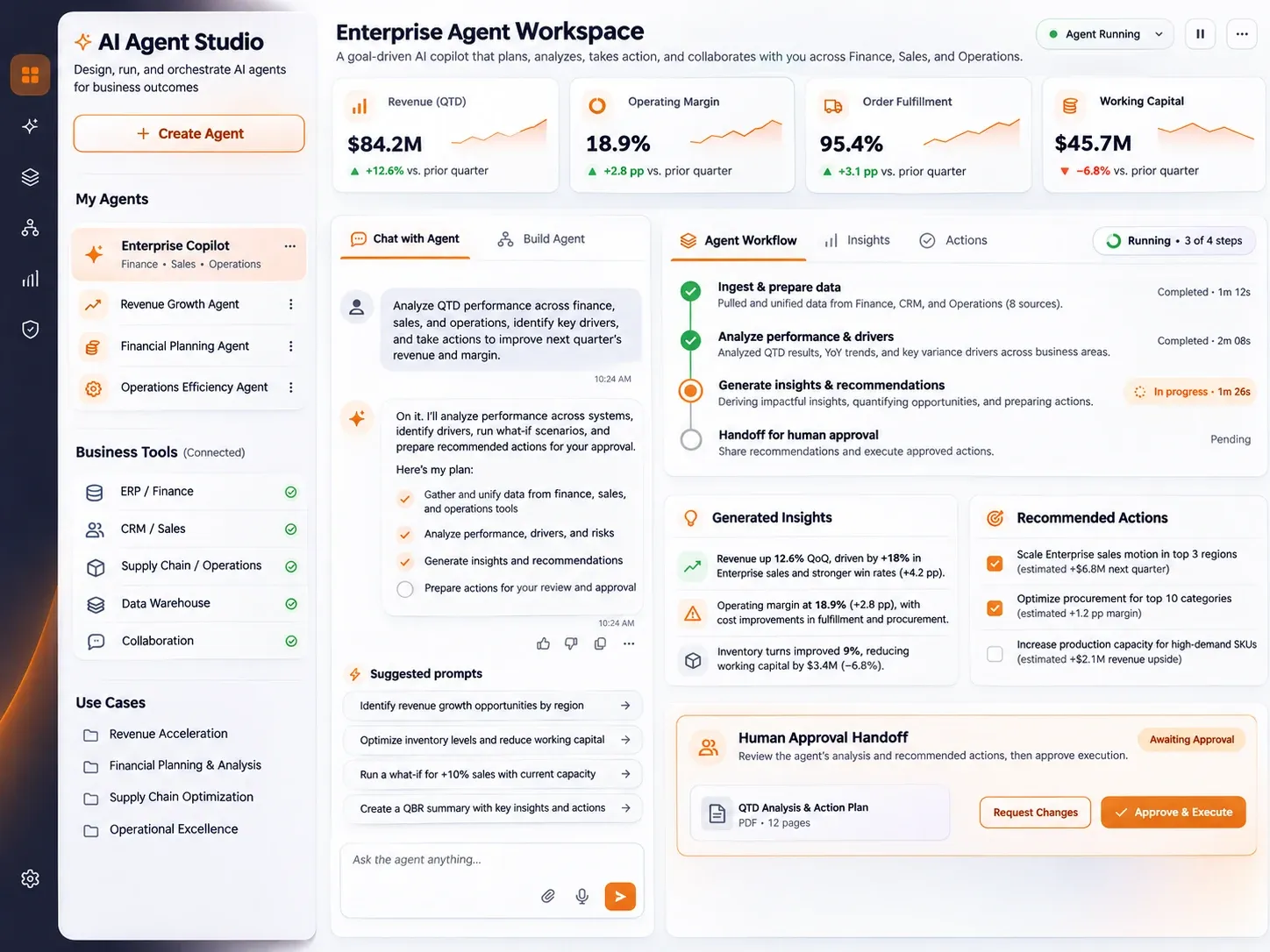
An AI agent does more than answer a question. It breaks a goal into steps, uses tools such as search, databases or APIs, and checks its own progress. That makes it useful, and it also means it needs more care than a chatbot.
Where agents are dependable today
- Research and summarisation across documents, tickets and reports.
- Routine back-office tasks with clear rules, such as matching invoices or updating records.
- Support triageclassifying requests, drafting replies and routing to the right team.
- Data preparationcleaning, mapping and documenting datasets.
Where to be cautious
Tasks with irreversible consequences, ambiguous goals or little tolerance for error need a human decision at key points. Autonomy should be earned step by step.
Guardrails that matter
- Scoped tools.Give the agent only the access its task needs.
- Approval steps.Require sign-off before actions that spend money or change important records.
- Logging.Keep a full trace of what the agent did and why.
- Evaluation.Test against realistic cases before and after every change.
Start narrow
Choose one workflow with a clear owner and measurable outcome. Let the agent draft while a person approves, then widen its freedom as evidence builds.
Design for hand-offs
The best agent systems make it easy for a person to take over, with the context already gathered. That keeps quality high and builds the trust that adoption depends on.
Want to put this into practice?
Talk to our team about your data, planning and AI goals, or book a demo and see how it works on your own data.